
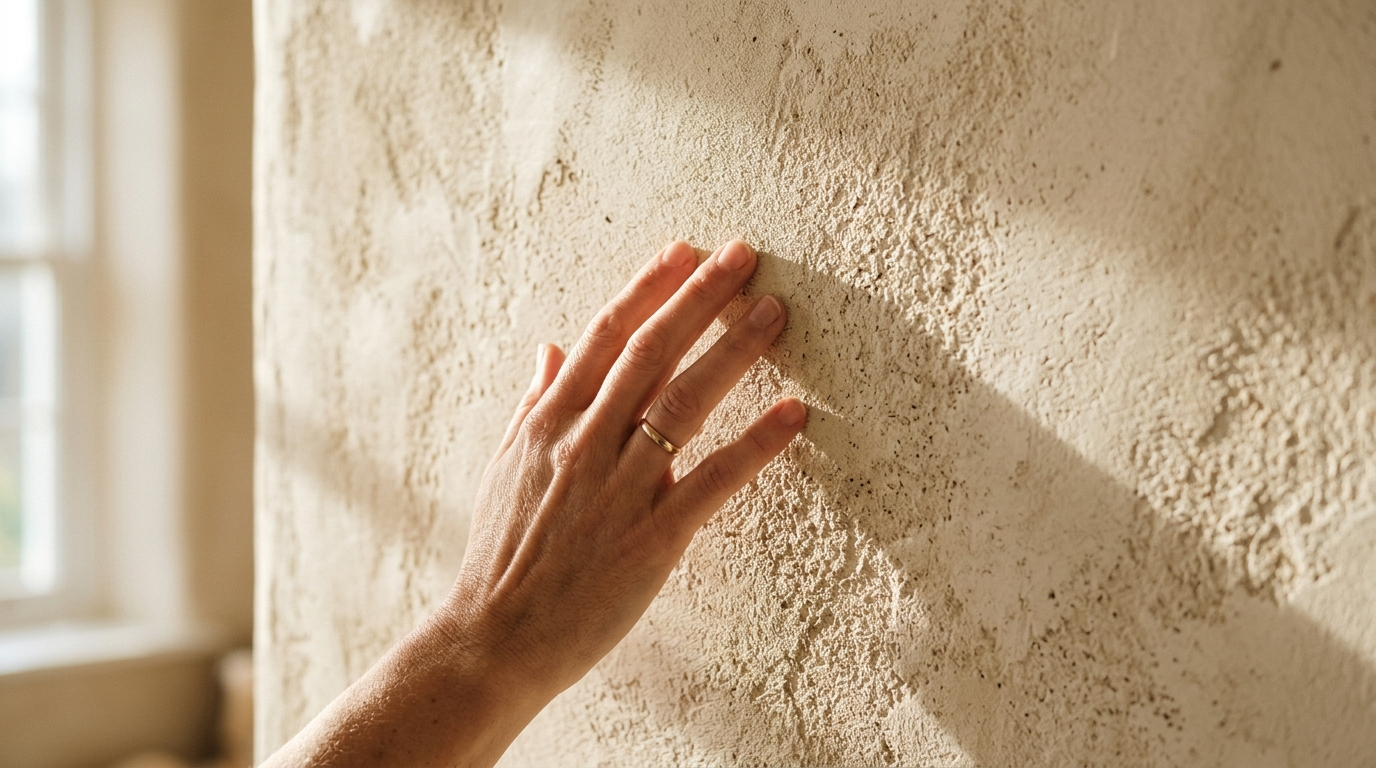
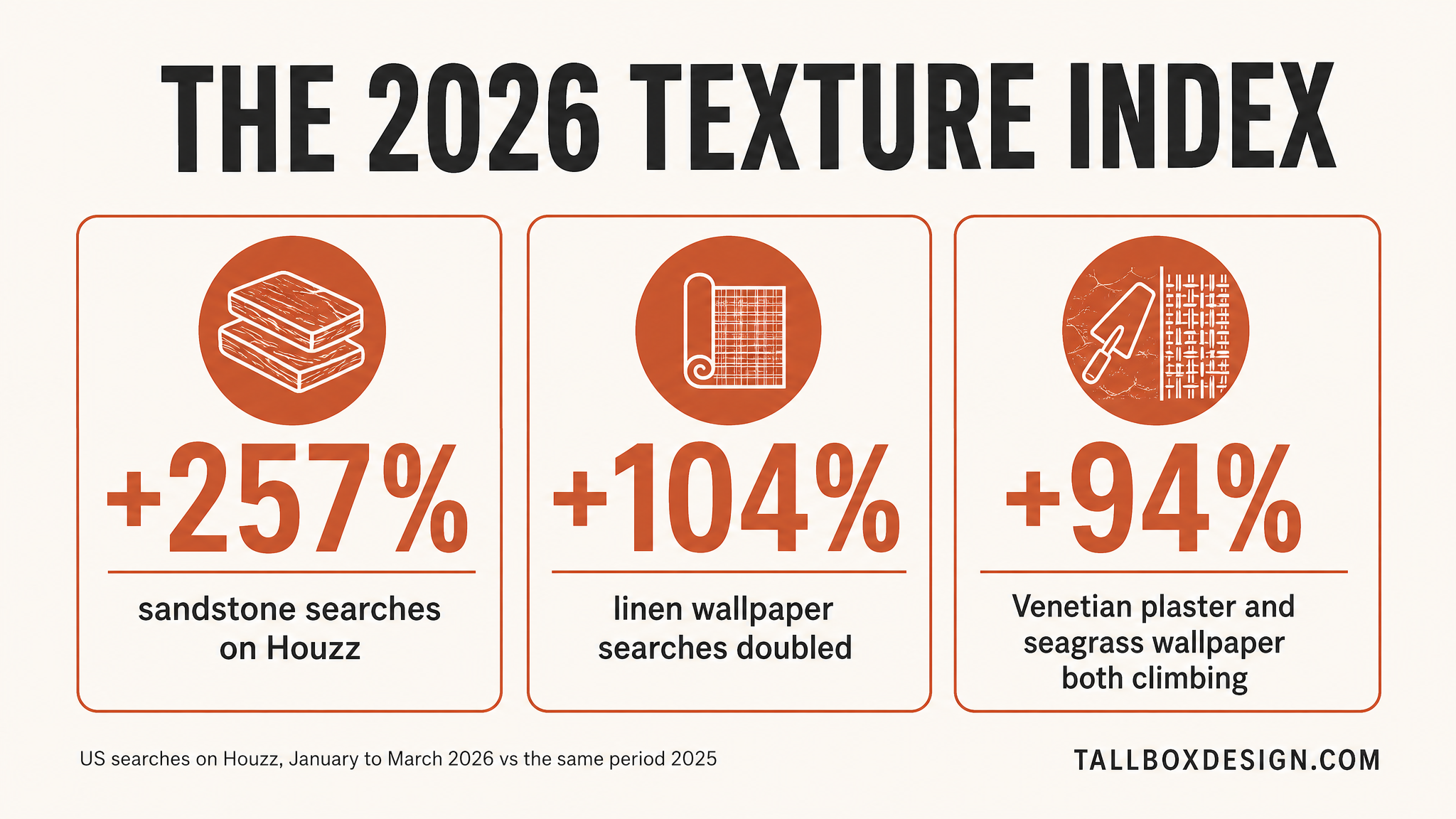
Touch is beating sight in American home design: searches for sandstone jumped 257 percent on Houzz this spring, and linen wallpaper doubled. The 2026 home wants surfaces a hand can read, not just a camera.
The sandstone surge and every figure in this article come from the 2026 US Houzz Emerging Summer Trends Report, which compares searches on the Houzz platform from January through March 2026 against the same months of 2025. Houzz searches come from homeowners actively planning projects, so the report previews what gets built next.
What the Houzz report says about texture
Tactile materials swept the Houzz report from wall to floor. Stone, woven fiber, hand-troweled plaster, and relief paneling all climbed at once, which reads less like one trend and more like a whole sense returning to the room. Every surface in the table below earns its place by feel first, looks second.
Source: 2026 US Houzz Emerging Summer Trends Report. Figures are year-over-year changes in US searches on the Houzz platform, January to March 2026 versus the same period in 2025.
Why is touch taking over home design?
Texture is rising because daily life went flat. Work, shopping, and entertainment now happen on glass rectangles, and a home of smooth painted drywall extends that flatness; a troweled wall or a woven paper pushes back against it.
Warm color is riding the texture wave in the same Houzz report: rust up 178 percent and chocolate brown up 153 percent, hues that live naturally in clay, stone, and wood. The palette and the surfaces point at one desired room, and it is not a white box.
Texture photographs better than smoothness, which sounds backwards until you watch light work. Raking light, the kind that skims along a wall from a side window, stretches every trowel ridge and weave line into a small readable shadow.
Flat paint gives a camera nothing to hold, so a smooth room photographs as one blank plane. A limewashed or plastered wall throws micro-shadows that read as depth on screen, which is why the tactile room wins in person and in the photos that sell houses.
How to layer texture without the clutter
To layer texture without clutter, work down the order of permanence: walls first, floors second, textiles third, relief details last. That order separates a collected room from a busy one, because the fixed surfaces set the tone before a single cushion arrives.
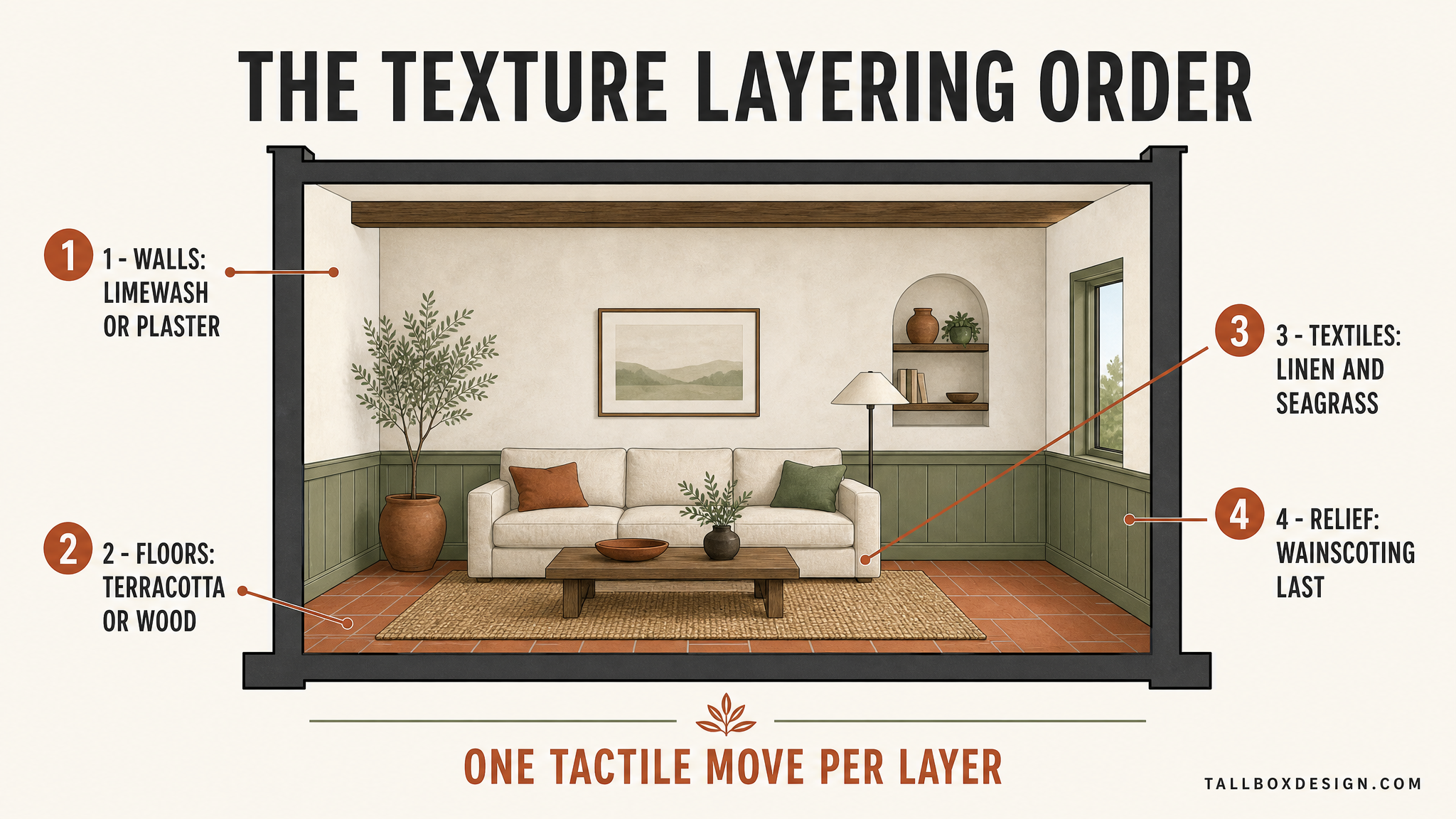
One tactile move per layer is the discipline. A limewashed wall plus a terracotta floor plus one woven paper already reads rich; stacking every texture in the table produces noise, not warmth. The same restraint drives the warm minimalism wave we covered this month.
Limewash is the most forgiving of the wall textures to apply: thin, watery coats brushed on in loose cross-strokes that dry lighter than they look when wet. The overlapping strokes leave the soft, mottled cloud the finish is known for, and the pigment sinks into the wall instead of sitting on top of it.
Texture is the hardest finish to judge from a flat swatch, because the effect depends on how light rakes across a full wall. Interior designers preview troweled and washed surfaces in interior renders for that reason, and the curved forms rising in the Houzz report’s kitchen data face the same light test.
The textures to start with, room by room
Bathrooms take the stone story best: sandstone and limewash shrug off humidity and turn the smallest room in the house into the most tactile. Bedrooms want the soft half of the texture table, linen wallpaper behind the headboard and wool underfoot.
Linen and seagrass papers hang differently from printed wallpaper: the weave has no repeating pattern to match, and the seams stay quietly visible as part of the texture. Installers paste the wall rather than the paper, which keeps the woven face clean.
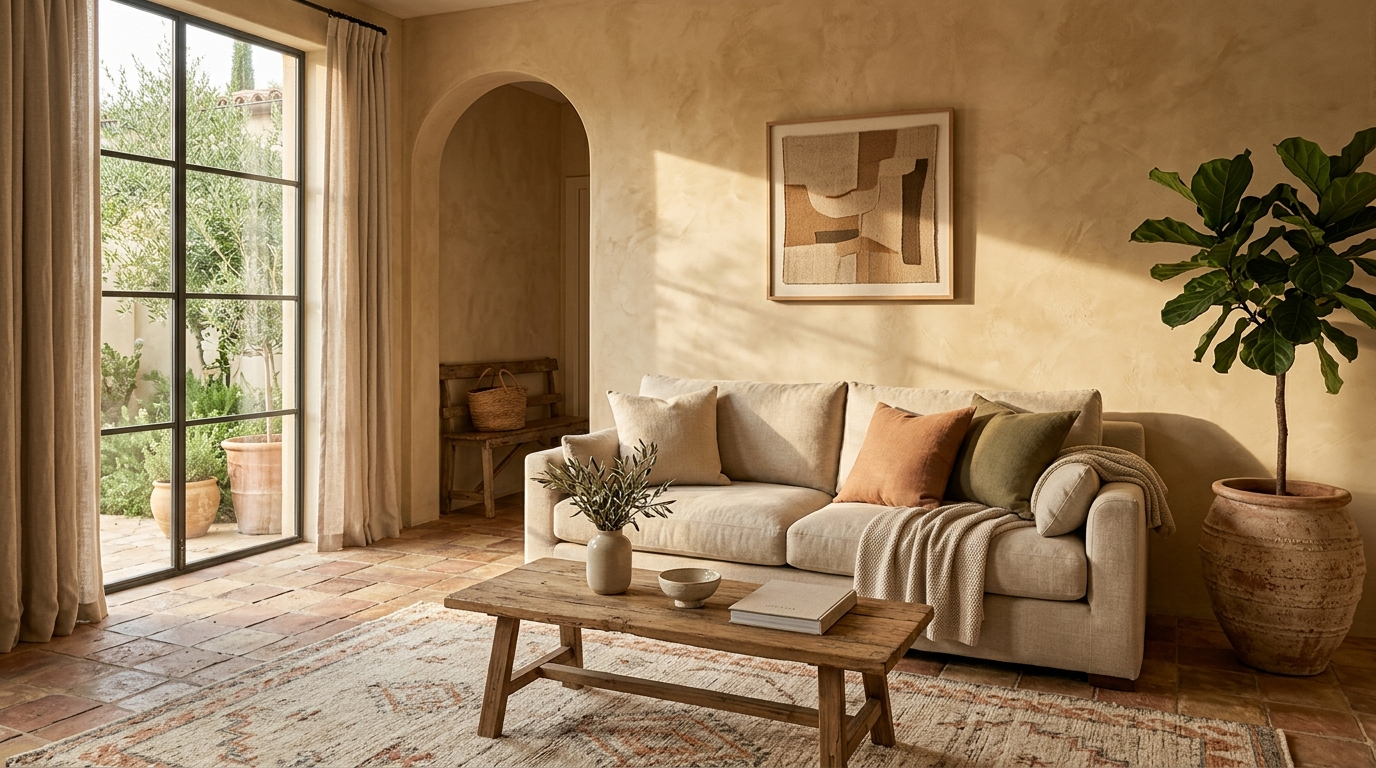
Living rooms carry Venetian plaster and the Houzz report’s warm palette together, rust and chocolate deepening as the light moves, the same earthy family that led the 2026 colors of the year. Kitchens take texture at the edges: a terracotta floor and wainscoted island survive traffic that a delicate paper would not.
Venetian plaster asks for more patience than limewash: the material goes on in several thin troweled passes and gets burnished until it takes a low sheen. Polished plaster bounces a little light back while limewash absorbs it, and both surfaces shift character every time the sun moves.
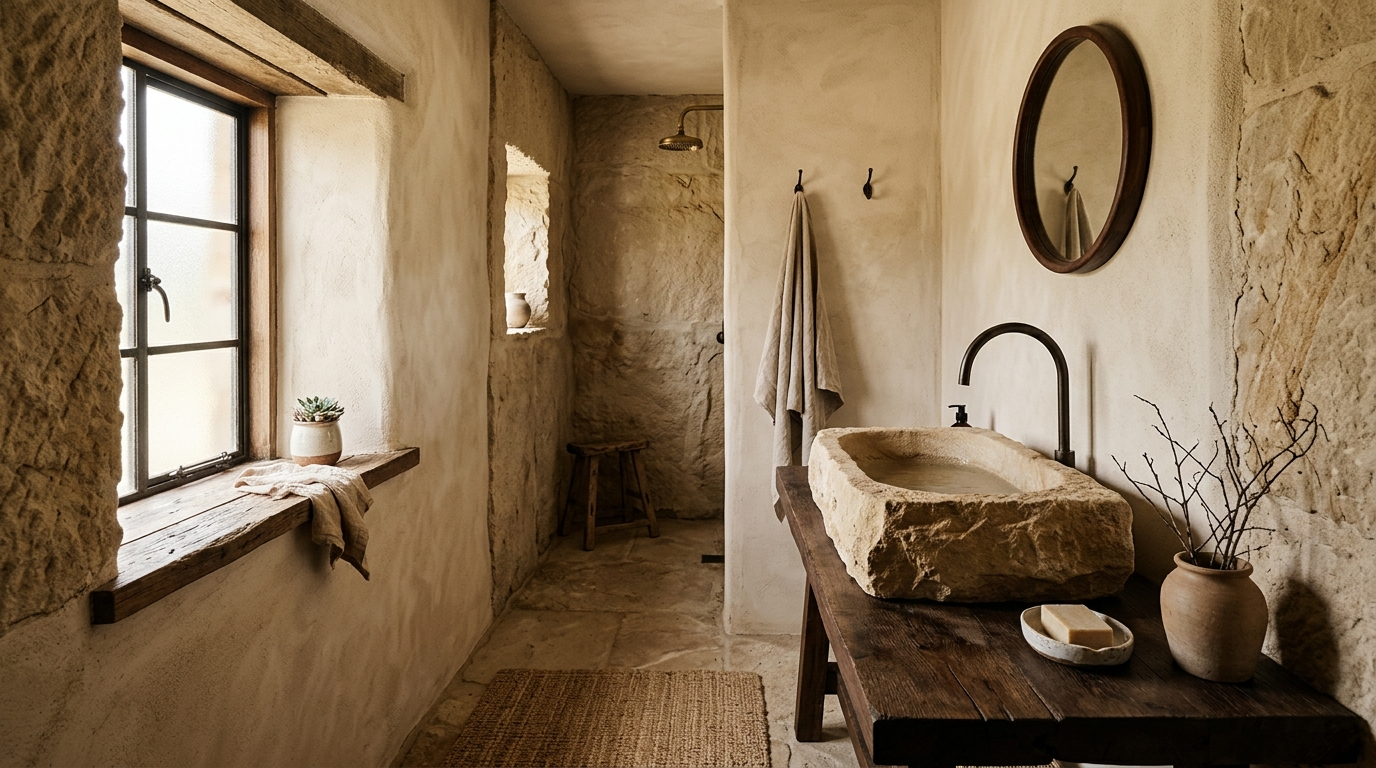
Entries and hallways are the low-risk testing ground for the whole tactile trend: a seagrass paper or a run of wainscoting dresses a pass-through space that holds little furniture. Hands land on those walls more than anywhere else in the house, so the texture works harder there.
Texture trend questions readers ask
QWhat is tactile design in a home?
Tactile design is an interior style that picks surfaces for how they feel and how they hold light: troweled plaster, woven wallpaper, unglazed stone, relief paneling. The room engages the hand and casts real shadows instead of presenting one flat plane. Color stays quiet in a tactile room; the surface itself does the decorating.
QIs wallpaper back in 2026?
Yes, and it came back as a texture rather than a pattern: linen wallpaper searches rose 104 percent and seagrass 94 percent on Houzz this spring. The new papers add weave and depth in near-solid colors instead of printed motifs.
QDoes heavy texture work in a small room?
Yes, when it stays on one layer. A powder room wrapped in seagrass or a small bedroom in limewash gains depth without losing an inch, because texture adds shadow rather than objects. Clutter shrinks small rooms; surface depth does not.
QIs limewash paint practical to live with?
Limewash trades some scrubbability for depth: the mottled finish patinas rather than wipes clean, and touch-ups blend more forgivingly than flat paint. High-traffic corridors may prefer a durable topcoat; bedrooms and baths wear it easily.
The takeaway on the texture turn
The Houzz numbers say American homes are being planned by hand again: sandstone up 257 percent, linen wallpaper doubled, plaster and limewash climbing together in the spring searches. Touch is the sense the flat-screen years starved.
Layer texture in order (walls, floors, textiles, relief) and stop at one tactile move per layer. A room you can feel needs less of everything else.


